
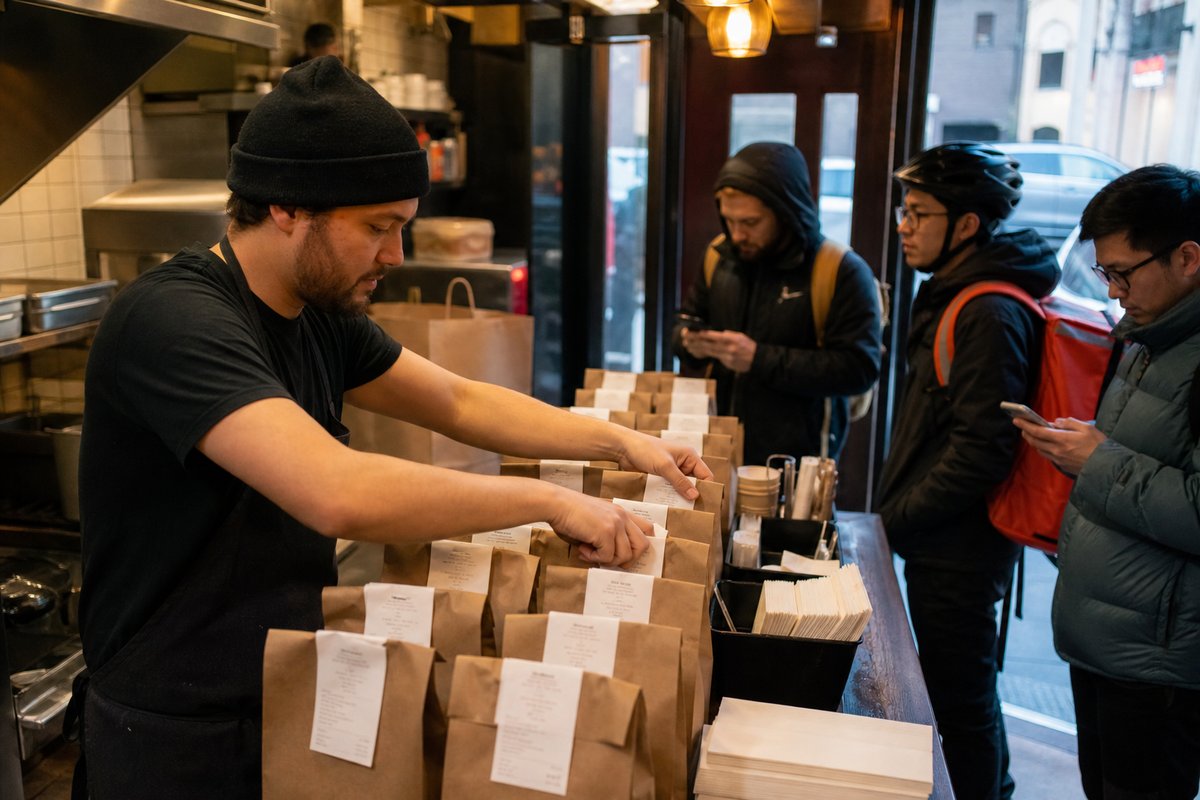
Third-party delivery apps have become a major force in restaurants over the past decade, and according to the report, their influence is now being felt far beyond the drivers and the bottom line. One of the clearest examples is the food runner, a role that has traditionally focused on carrying dishes from the kitchen to the table but is now increasingly tied to the nonstop flow of takeout and delivery orders.
The article opens with a scene from a small Vietnamese restaurant in Brooklyn, where one front-of-house worker was handling several jobs at once: hosting, serving, and running food. While dine-in traffic was light, the worker was still rushing between tables and delivery pickups, with stacks of long receipts attached to to-go bags and a steady stream of orders waiting to go out. That kind of pressure, the report suggests, has become more common as apps such as Grubhub, Caviar, DoorDash, and Uber Eats have expanded.
Food runners are now expected to do much more than simply move plates from kitchen to customer. In many places, they are also assembling, packing, labeling, and handing off takeout orders, while occasionally helping with table service and cleanup. The pay, however, has not necessarily kept pace. According to ZipRecruiter, the average hourly wage for food runners in New York City is about $14, and the national average income is around $28,400 before tips.
The report also highlights how tip distribution can leave runners at a disadvantage. At one Brooklyn restaurant group location, staff members other than management and floor captains receive hourly minimum wage plus a share of the tip pool, but bartenders and servers take a larger portion than food runners and barbacks. One runner interviewed for the piece said delivery apps now account for roughly a quarter of the restaurant’s daily revenue and that the rise in Uber Eats orders has significantly changed her workload. She described packaging large and complicated orders, including catering, as time-consuming work that interrupts dine-in service, and said workers have asked management for either a bigger share of tips or a raise in hourly pay. So far, she said, those concerns have been met with sympathy but no change.
Beyond compensation, the article points to another operational strain: the effect of delivery volume on in-person dining. Workers say the extra app orders slow service for guests inside the restaurant, and one possible short-term fix mentioned in the piece is turning off Uber Eats at busy times, though that solution has not been implemented. The broader picture, according to the report, is that food runners are absorbing more of the labor created by delivery apps while remaining one of the least recognized and least rewarded parts of the restaurant team.
Source: eater.com