
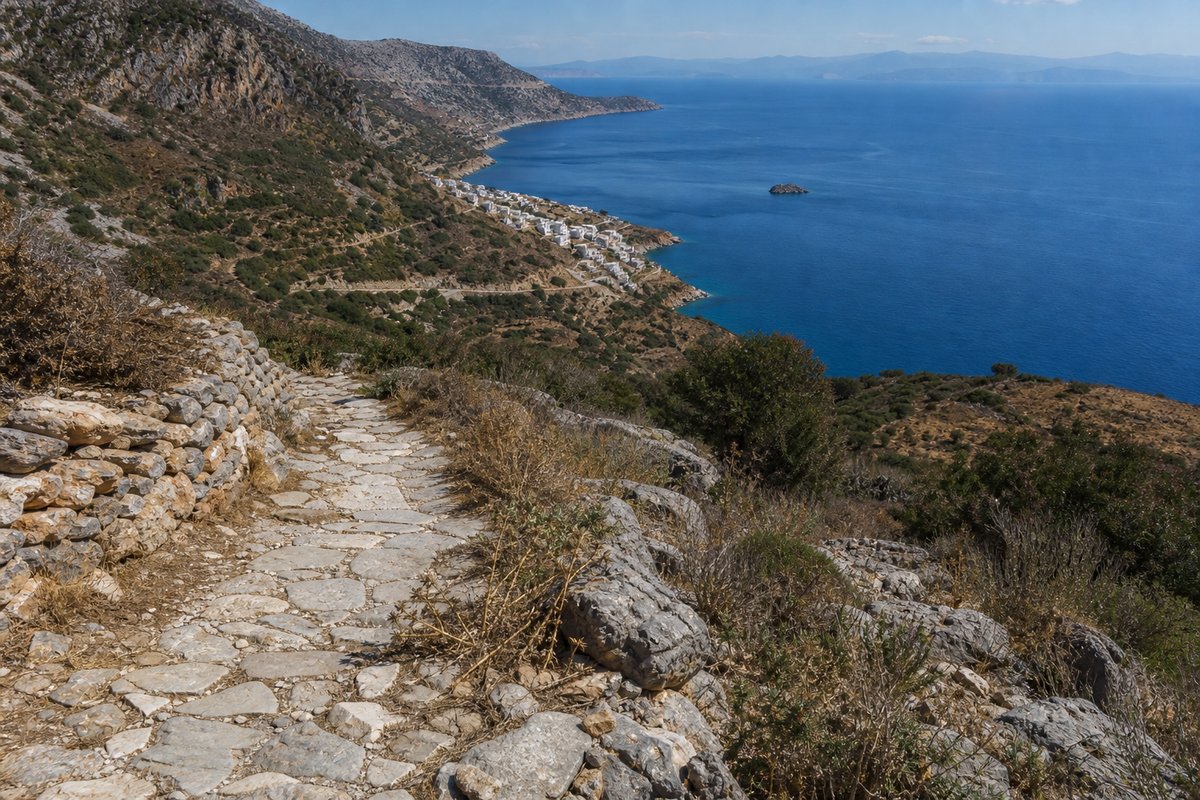
The Peloponnese, the broad southern peninsula of Greece, has long been known to travelers in the know for its rugged coastline, mountain landscapes, and close ties to the sea. According to the report, this is a region shaped by three bodies of water—the Ionian, Mediterranean, and Aegean—and by a network of small settlements that have remained relatively quiet compared with better-known Greek destinations. Even though it lies only a few hours by car from Athens, the peninsula still attracted only a small share of foreign visitors in 2025.
That may be changing. A new focus on the Peloponnese has arrived alongside Christopher Nolan’s The Odyssey, which was partly filmed in southern Messinia and brings renewed attention to places associated with Homer’s epic. The article notes that the peninsula’s links to myth run deep, from Odysseus to Hercules, and that the film has helped highlight real locations such as Nestor’s Cave and Methoni Castle. At the same time, the region is being positioned as a stronger travel destination through infrastructure and tourism projects that have opened it up more than before.
A new trail network across ancient routes
One of the biggest developments is the Peloponnese Trail Network, described as Greece’s largest hiking system. Built through local effort, it connects nearly 1,200 miles of old footpaths with villages across the peninsula. The network is intended not only to make hiking easier, but also to support communities that want more visitors and new economic life. According to the report, most of the 11 official trails are in the four regions beyond Messinia, giving travelers a broader view of the peninsula’s landscapes and history.
The article follows that idea on the ground, with hikes that pass from ancient sites to later fortifications and mountain settlements. On the Argolis Trail, the route begins near Epidaurus, known for its remarkably preserved ancient theater, and continues toward Palamidi, the Venetian fortress above Nafplio. Elsewhere, the Parnon Trail leads toward Leonidio and the striking red cliffs of Kokkinovrachos. The piece also points to Daskalio, a small uninhabited island near Tolo, where local residents gather seasonally for a chapel service, as an example of how closely life in the Peloponnese remains tied to the sea.
Beyond the scenery, the report presents the peninsula as a place where travel, memory, and local identity meet. Residents and returnees are working to encourage a slower, more rooted kind of tourism, while still preserving the villages and traditions that define the region. For travelers in Europe, the Peloponnese is emerging as a destination where hiking can lead not just through mountains, but through layers of Greek history and myth.
Source: cntraveler.com