
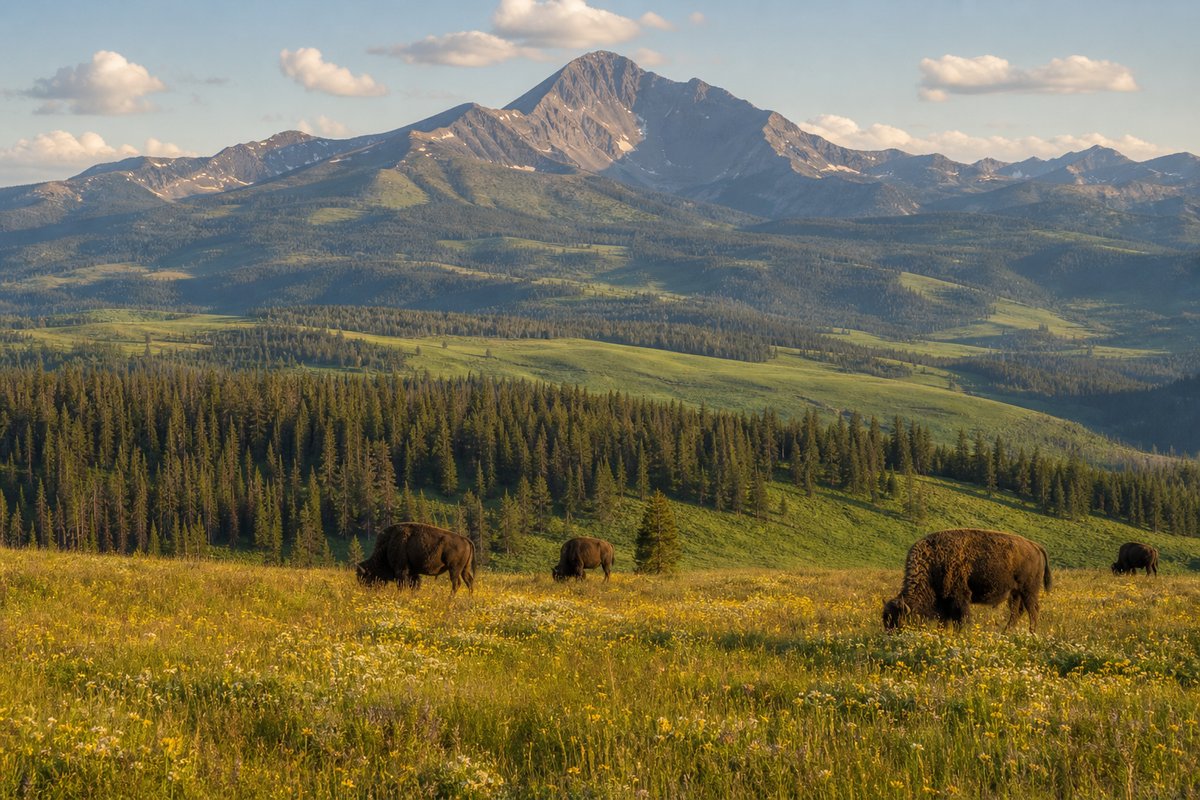
Big Sky, Montana is often introduced as a ski destination, but according to the report, its summer season offers a very different kind of appeal. In the Madison Range above Yellowstone National Park, the landscape feels slower and more expansive, with lodgepole pines, spruce, firs, and meadows brightened by Indian paintbrush and fleabane. A horse wrangler at Lone Mountain Ranch describes the area as a sacred place, shaped by generations of Indigenous use and by geology that reaches back more than 70 million years.
The article also shows how much of Big Sky’s summer identity is tied to outdoor movement. Horseback rides, fly-fishing on the Gallatin River, hiking, and mountain biking all draw visitors and locals into the surrounding wilderness. Guides and hospitality workers say they stay for the warmer months as much as the winter ones, with one describing the area as an ideal place to linger when the snow melts. Wildlife remains part of the experience too, with bison in the Yellowstone area and possible sightings of bald eagles, mountain goats, elk, wolves, and grizzlies in nearby wilderness.
At the same time, Big Sky has changed quickly. The community, which has about 3,000 year-round residents, took shape only after Big Sky Resort opened in 1973. In the past five years, Montage Big Sky and One&Only Moonlight Basin have added high-end lodging near Lone Mountain, while Big Sky Resort owner Boyne Resorts has expanded lift access over the past decade. The area’s profile among wealthy travelers has also grown, helped by the Yellowstone Club and a pandemic-era surge in second-home purchases. Some longtime residents are uneasy about that shift, but others see benefits, including new community investment and more year-round energy in a place that was once much quieter outside ski season.
A summer destination with deeper roots
For travelers who know Big Sky only for winter sports, the report suggests summer is when the destination’s scale and history become easier to feel. The scenery is less hurried, the trails are more open, and the region’s mix of ranch life, wildlife, and luxury development gives it a distinctive character that goes well beyond the slopes.
Source: cntraveler.com